
Getting online in Switzerland: what a tourist SIM costs in francs, where the alpine signal runs out, and why Basel's airport is not in Switzerland
Contents:
Switzerland runs one of the best mobile networks in Europe and charges accordingly – and it stays flawless right up to the moment the valley walls close in.
Swiss hotels booked 43.9 million overnight stays in 2025, a record 22.8 million of them from foreign guests (Federal Statistical Office, published 2026) – nearly all arriving with a plan that stops working properly at the border. Three ways out: roam and pay by the day, queue for a Swiss SIM with your passport, or install a travel eSIM before you leave.
👉 Want the price first? The Swiss package sizes are here.
What a Swiss counter charges for a week of data
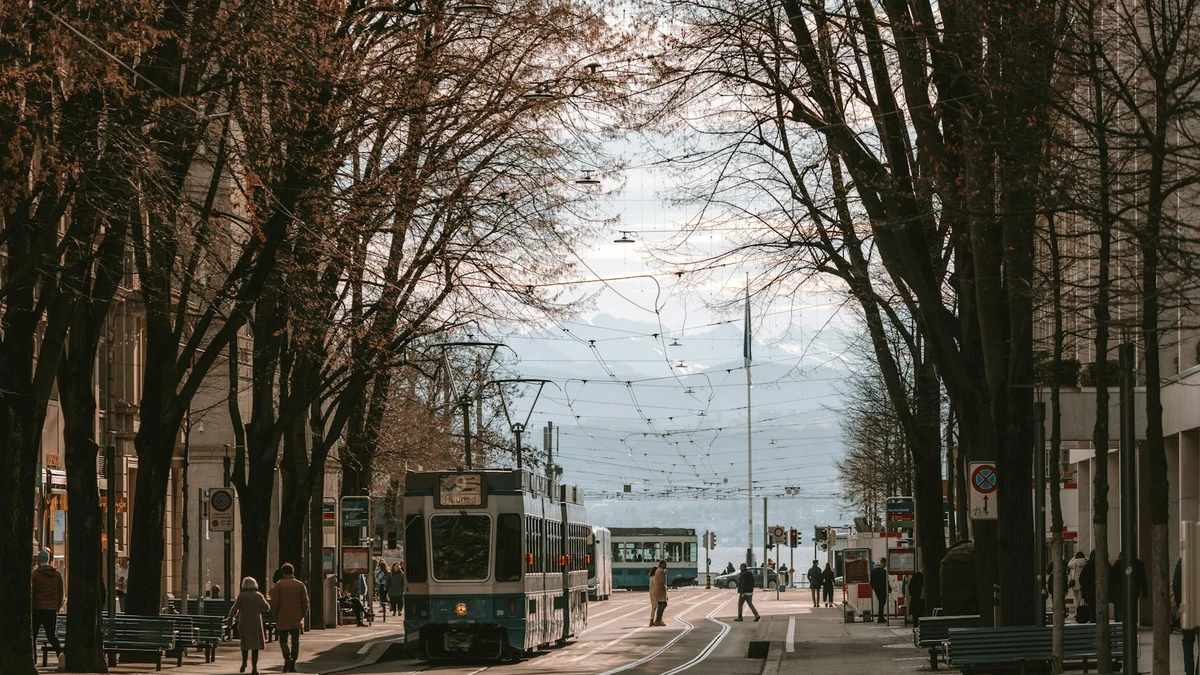
Three national networks share the country: Swisscom, Sunrise and Salt. All three sell prepaid to visitors; none sells a bargain.
Published prepaid prices from the operators’ own pages, August 2026, converted at 1 CHF = 1.24 USD (derived from ECB euro reference rates, 27 August 2026):
| Prepaid offer | In francs | Roughly in dollars |
|---|---|---|
| Unlimited flat rate, 7 days | CHF 20 | about $25 |
| Unlimited flat rate, 15 days | CHF 40 | about $50 |
| Unlimited flat rate, 30 days | CHF 65 | about $81 |
| Pay-per-day unlimited, per 24 hours used | CHF 1.99–2.50 | about $2.50–3.10 |
| Data pack, 25 GB / 30 days | CHF 29.95 | about $37 |
Two things hide in that table. Some networks add a starter fee of CHF 19.90, about $25, usually offset by the credit it carries. And the per-day rate is billed only on the days you actually use data – the cheapest line here for a holiday, with the flat rates winning only from about a month.
Then the paperwork. Swiss law requires every SIM, prepaid included, to be registered to a named person – a passport or ID card at a counter, and a wait while it is checked. No Swiss address or bank account is needed, but the document is not optional.
Near-total coverage, and the valleys it still misses
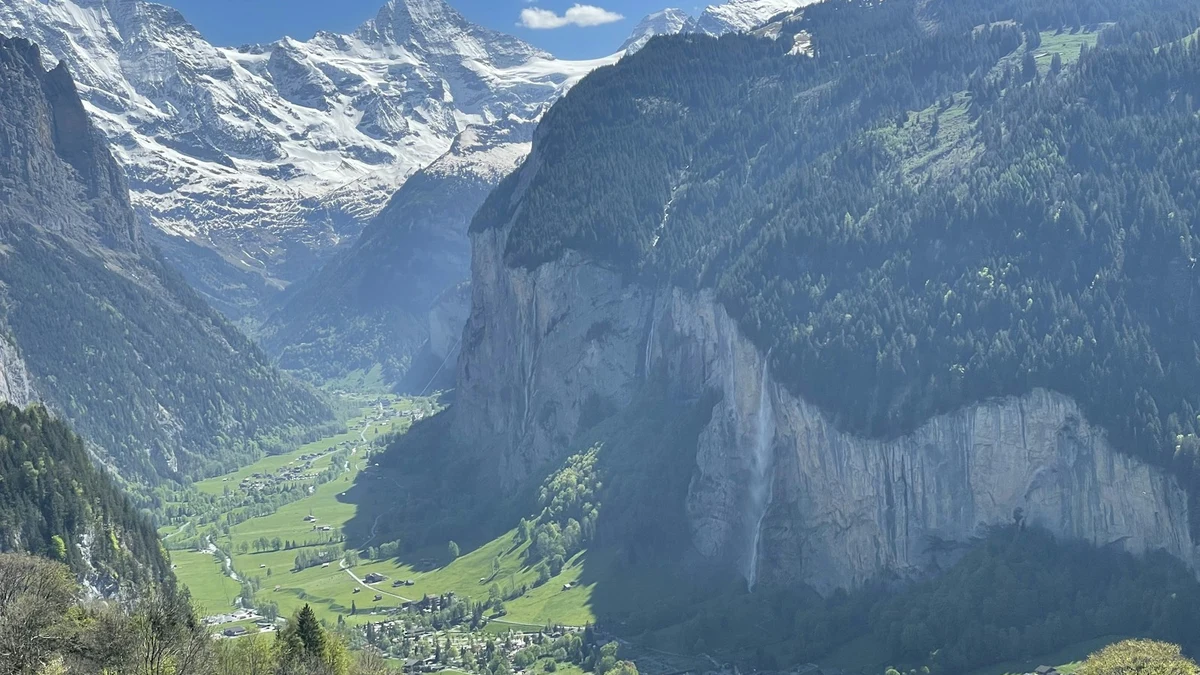
On paper there is nothing to discuss. ComCom, the federal communications commission, reports almost 100% of the population covered by 4G at the end of 2025, with each operator claiming 5G at about 99% (ComCom and operator disclosures, checked August 2026).
Read the unit of measurement, because it decides your holiday: those percentages count people, not square kilometres. The Swiss live in the valleys and on the plateau, which is where the masts are. The gaps sit where the trip happens:
- Deep, steep-sided valleys. Signal arrives from one flank and a thousand metres of limestone does the rest – the floor can be worse than the ridge above it.
- Cable cars mid-span. Base and top stations are served; the stretch between them often is not.
- High passes and hut approaches. Above the last hamlet, treat a signal as a bonus.
The answer is preparation, not a bigger plan. Save the map and the timetable on hotel Wi-Fi, and know the number: 1414 reaches Swiss air rescue from inside Switzerland, 112 is the European emergency number (Rega, checked August 2026). Emergency calls go through on any available network.
Roaming in: the hole in the middle of your Europe bundle
Switzerland joined neither the European Union nor the EEA, so the free-roaming arrangement that covers the rest of the continent stops dead at its border. One fact, three different bills.
All three figures below come from published 2026 roaming price comparisons, checked in August 2026. From the EU, a phone that costs nothing extra from Lisbon to Helsinki reverts to international rates the moment it crosses the Swiss border, usually packaged as day passes around €5–15. From the UK, the major price lists file Switzerland outside the Europe zone, with add-ons typically £5–8 a day – a second charge stacked on the EU fees that came back after 2021. From the US, day passes commonly run $10–15 per device per day.
A weekend of that costs a takeaway. Ten days of driving between lakes and passes lands somewhere between fifty and a hundred and fifty, in whichever of those currencies the bill arrives.
👉 Travelling from Britain? What the EU legs of the same trip now cost is set out here.
Two airports that are not quite in Switzerland
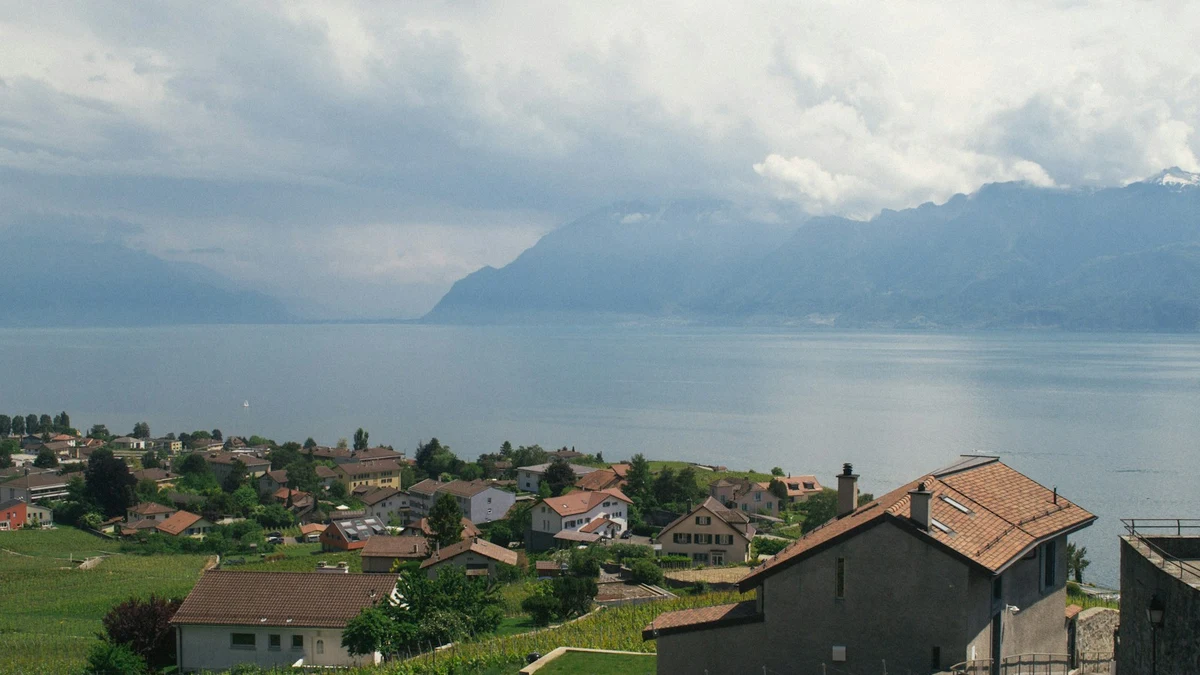
Switzerland borders five countries, and two of its gateways sit on one.
EuroAirport Basel Mulhouse Freiburg lies entirely on French soil. Run jointly under a 1949 Franco-Swiss treaty, it is split into French and Swiss sectors and joined to Basel by a 2.5 km customs road. Your feet are in France when you land – and a plan scoped to Switzerland alone can leave you on a French network before you have collected your bag.
Geneva Airport has a French sector too, used by passengers to and from France without entering Switzerland at all. The city is wrapped in French territory on three sides, which is why phones there latch onto a mast across the line unasked.
The same happens on the lake shores facing France and on any day trip into Liechtenstein – a separate country however small it looks. If the route touches more than one flag, a regional package covering Europe or a metered Pay-per-MB balance crosses with you.
A travel eSIM on Swiss masts: what it does and what it will not do
An eSIM arrives as a QR code instead of a piece of plastic. On Swiss soil it registers as a roaming guest on the same Swisscom, Sunrise and Salt masts everyone else uses, while the SIM you already have carries on taking calls on your own number. Only one switch stands between you and a working phone – Data Roaming, turned on for the travel profile itself. Where it stops short:
- eSIM support in the handset is the one hard requirement; the supported devices list is where to look.
- You get data, not a Swiss number – so anything that insists on a Swiss SMS remains out of reach.
- Coverage is whatever the local network provides. No plan invents bars in a tunnel.
- The terms confine it to travel – it is not a plan for the country you live in.
Setting up a Torrum eSIM for Switzerland
- Start with the handset: eSIM-capable and not carrier-locked. Thirty seconds on the compatibility guide rules that in or out.
- Create the account at torrum.io using whichever of Google, Apple or Telegram you already have.
- Choose by route, not by country: a Switzerland data package, a metered Pay-per-MB balance, or Unlimited by the period.
- Top up by card. The floor is $10, and one transaction can carry $10–100.
- Load the profile from its QR code; the app walkthrough has a screenshot of each step.
- Enable Data Roaming on the new profile and nothing else – your own SIM stays exactly as it is. If the profile refuses to install, Telegram support will walk you through it.
Torrum plans for Switzerland: how much data costs
Three shapes, and the trip rather than the destination picks between them. Nothing counts down at checkout: validity begins when the profile first registers on a Swiss network.
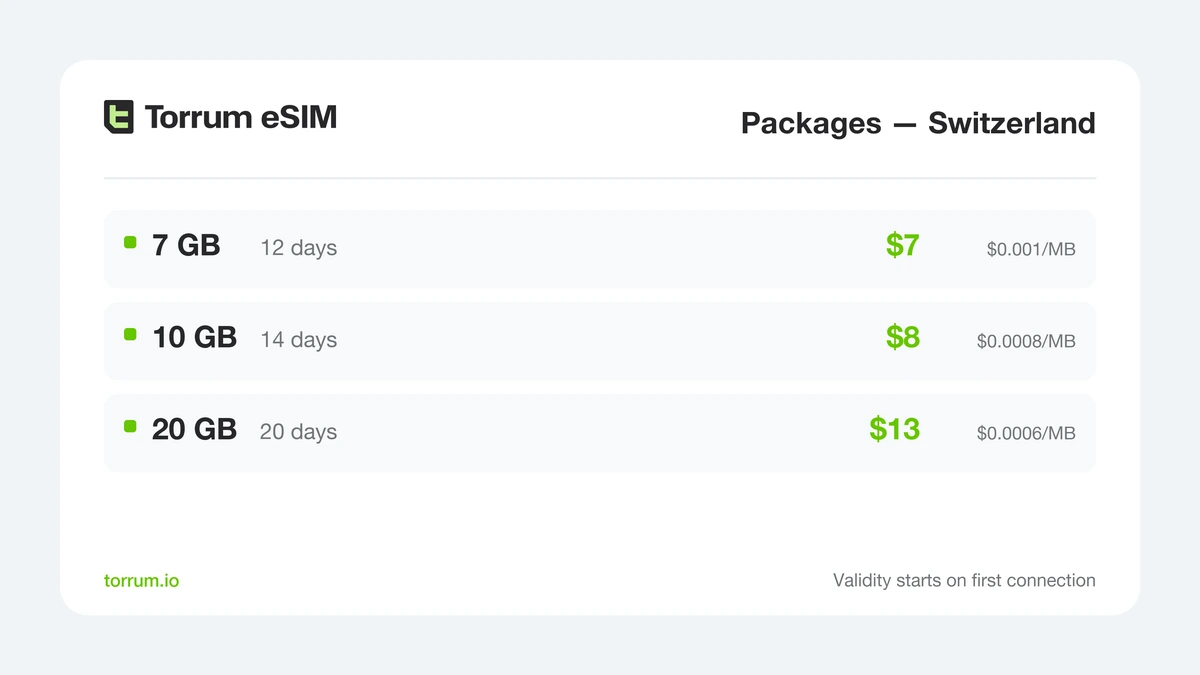
Switzerland data packages. The largest runs for twenty days, which outlasts very nearly every Swiss holiday.
A week of trains, maps and messaging sits comfortably in the smallest size; step up for video calls home or a tethered laptop. Our guide to how much data a trip needs has the numbers.
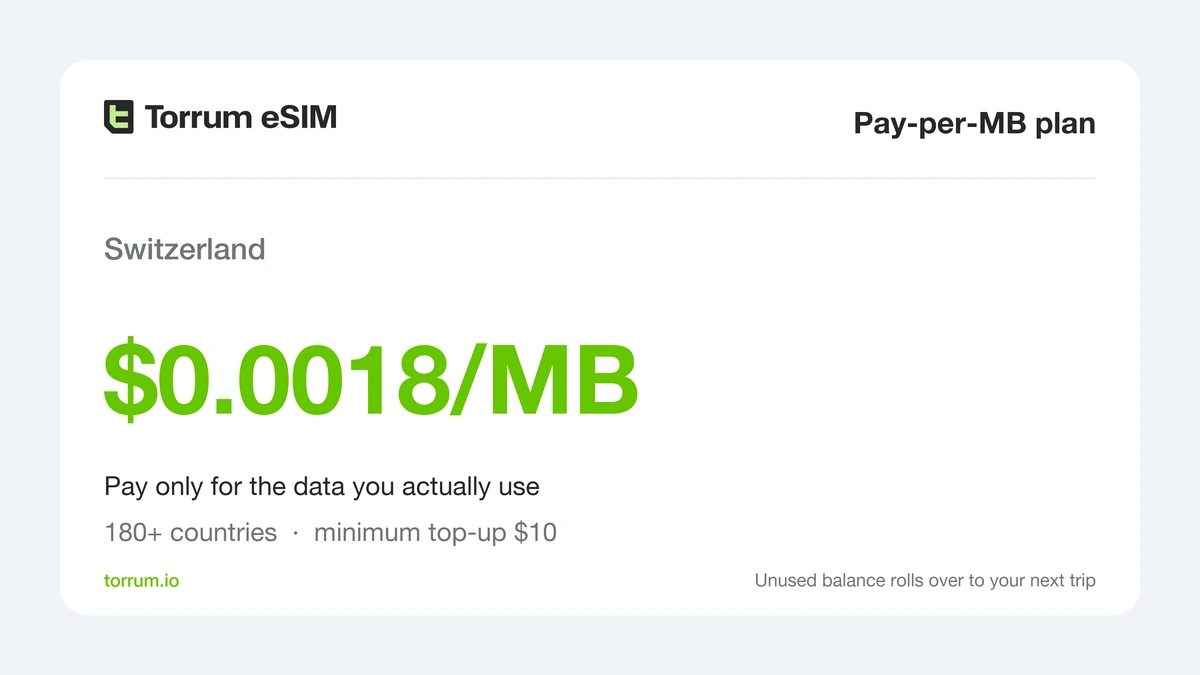
Switzerland metered by the megabyte at $0.0018. You are charged for traffic and nothing else, and an untouched remainder is simply still there when you next fly.
That metered balance suits Swiss geography best: the same balance works in 180+ countries, so an afternoon in Como or a drive into Liechtenstein keeps drawing from the same pot – each at its own country rate, listed on the plan page.
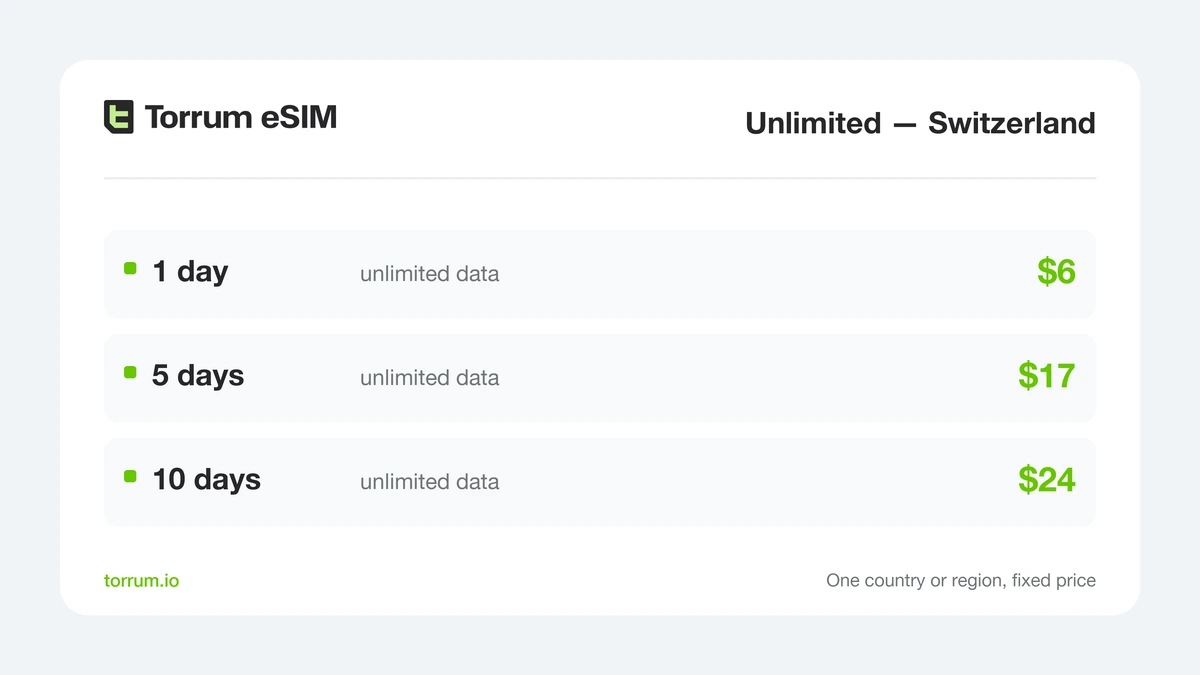
Unlimited for Switzerland: a period is bought outright, so a heavy week and a light one cost exactly the same.
Free Wi-Fi in Switzerland: the ID check nobody warns you about
Swiss public Wi-Fi is plentiful and fast – and legally obliged to find out who you are. Geneva Airport states plainly that Swiss law requires users of a free Wi-Fi service to be identified before being let on (gva.ch, checked 28 August 2026). Three doors, only one easy on a foreign number:
- Geneva Airport runs Free_Wi-fi_GVA – SMS code, a boarding pass scanned at a concourse terminal, or ID at the Visitors Center. The device then reconnects automatically for six months.
- Zurich Airport gives eight hours free, again by SMS or by a code issued against your boarding pass at a WiFi Station. After that it is chargeable, from CHF 6.90 an hour (flughafen-zuerich.ch, checked 28 August 2026).
- Railway stations carry SBB-FREE at 80 stations, free after one registration (sbb.ch, checked 28 August 2026). Useful, since Swiss travel is mostly rail.
It is the SMS door that shuts on a foreign number, so find the boarding-pass kiosk before you need it.
Switzerland compared: roaming vs local SIM vs eSIM
| What matters | Roaming | Swiss prepaid SIM | Torrum eSIM |
|---|---|---|---|
| Ready when you land | Yes | Only after the counter | Yes – the profile is already on the phone |
| Identity check | None | Passport or ID card, required by law | None |
| Cost of a one-week trip | Day passes, in three currencies | Francs, at Swiss retail prices | Fixed and known before departure |
| Your usual number | Still yours | Replaced by a Swiss one | Still yours, on the home SIM |
| Day trip to France, Italy or Liechtenstein | Billed as another country | Not covered | Regional package or Pay-per-MB covers it |
| Landing at EuroAirport Basel, on French soil | Billed as France | Not covered until Switzerland | Covered by the regional or metered plan |
| Best for a month or more | No | Yes – long validity, local price | No |
Five Swiss trips and the plan each one wants
A week in one region – Bernese Oberland, Valais, the lakes. One region, one week, no surprises: the entry-level Switzerland package covers it and the decision is over.
A rail route that crosses out and back. Milan on Tuesday, Chamonix on Friday: a single Pay-per-MB balance does not care which side of the border the train is on.
A conference in Geneva, Zurich or Basel. Video calls and a tethered laptop wreck every estimate. Buy the block of days on Unlimited and stop counting – the longer periods are the better value per day.
Hiking or ski-touring above the villages. The terrain is the constraint here, not the plan: offline maps, an agreed meeting point, 1414.
A month or longer in one place. Honestly: this is where a Swiss prepaid SIM wins, and the queue is worth it once.
FAQ
Does my EU or UK Europe bundle cover Switzerland?
Rarely. Switzerland is outside both the EU and the EEA, so most price lists put it beyond the Europe zone and charge international rates.
Can I buy a Swiss SIM card without showing ID?
No. Every SIM sold in Switzerland, prepaid included, has to be registered to a named person, so the counter will ask for a passport or ID card.
Why does Swiss airport Wi-Fi ask who I am?
Because Swiss law requires users of free Wi-Fi services to be identified. In practice you authenticate by SMS, by scanning a boarding pass, or by showing ID at a desk.
Will my phone work on a mountain hike?
Sometimes, and less reliably than the national coverage figures suggest – those percentages describe the population, not the terrain. Download maps first.
What number do I call in a mountain emergency?
1414 reaches Swiss air rescue from inside Switzerland, and 112 is the European emergency number. Emergency calls go through on any available network.
Is Basel’s airport actually in Switzerland?
No – EuroAirport Basel Mulhouse Freiburg stands entirely on French soil, with a Swiss sector and a customs road into Basel.
Will a Switzerland plan cover a day in Liechtenstein?
Not a country plan – Liechtenstein is a separate country. The Europe regional package includes it, and a Pay-per-MB balance covers it without a second purchase.
Is there Wi-Fi on Swiss trains?
Plan around the stations instead: SBB provides free SBB-FREE Wi-Fi at 80 stations after one registration. On the move you rely on the mobile network.
My flight is three weeks away – is it too early to buy?
No. The clock starts at the first connection abroad, not at checkout, so you can buy it a month early and lose nothing.
Will my handset take an eSIM at all?
Recent iPhones, Pixels and mid-range or better Samsungs generally do; iPhones bought in mainland China are the usual exception. Look yours up on the device list.
Final thoughts: the best connection option for Switzerland
Switzerland punishes the default choice twice over: no European roaming deal reaches across its border, and the local SIM carries Swiss retail prices plus a passport and a queue.
For anything from a long weekend to a fortnight, the profile you load before leaving removes both problems at once: no counter, no ID to hand over, a figure agreed in advance, and a plan that widens to the whole region when the route crosses a border. The only question left is how far above the last village you plan to walk – and whether you saved the map first.
👉 One thing left on the list. Take a Switzerland package before you fly – and if the route dips south, our Italy guide picks the story up one border away.


 Continue with Google
  Continue with Telegram

